top of page

Resources from

A Practical Guide to Teaching
Neurodivergent College Students

by Jennifer L. Pusateri

Chapter 1: Neurodivergence Basics

Three circles in a line representing neurodiversity, neurotypical, and neurodivergent.  Open linked PDF for more details
The Neurodivergent Umbrella. Learning disabilities includes dyslexia, dysgraphia, dyspraxia, and dyscalculia. Behavioral conditions includes ADHD, Autism, and Tourette Syndrome. Mental health conditions includes OCD, depression, anxiety, and trauma. Neurological conditions includes brain injuries, seizures, and sensory processing. Image created by J. Pusateri, adapted from Doyle 2020
Chapter 1

Chapter 2: Strengths of Neurodivergent Students

Diagram of ADHD Strengths (Nordby et al., 2023) with four sections: (1) The Dual Impact of ADHD characteristics- energetic, ability to hyperfocus, and spontaneous, (2) The Pursuit of New Experiences- curiosity, courageous, and explorative, (3) The Unconventional Mind- creative, different perspective, socially unconventional, and good at problem solving, (4) Resilience & Growth- resilient, insightful, accepting & tolerant, and warm & empathetic
Autistic Strengths (Cherewick & Matergia, 2024)- 1. Perceptual strengths include Discernment, Actuity, Memory, and sensory seeking/sensitivity, 2. Reasoning strentghs include attention to detail, problem solving, pattern recognition, and hypersystematizing, 3. Expertise strengths include special interests, in-depth knowledge, and hyperfocus/deep-focus, 4. Character strengths include non-judgement, fairness/justice, creativity/curiosity, honesty/integrity, and humor
Chapter 2
Dyslexic strengths include "big picture" thinking, perceptiveness & intuition, empathy, resilience, curiosity, creativity, visual-spatial abilities, problem-solving. Based on Kannangara et al., 2018 & Wallbank, 2023
ADHDers are energetic, spontaneous, courageous, explorative, and self-aware. Autistics have special interests, in-depth knowledge, honesty/integrity, are detail-oriented and are good at hypersystematizing Dyslexics are abstract thinkers, inventive, love discovery, think in pictures, and have good big-picture thinking.  ADHDers and Dyslexics are both intuitive, empathetic, out-of-the-box thinkers, have good visual-spatial skills, and are resilient. Autistics and ADHDers are both justice-oriented, fairness-oriented, and both have the ability to hyperfocus. Autistics and Dyslexics both have good visual-spatial reasoning, and strong memory. The overlapping skills between ADHDers, Autistics, and Dyelexics are that they are interest-driven, pattern-seeking, and are good a pattern-seeking, creativity, and they have lots of curiosity.

Chapter 3: Executive Functioning

3.3- Brown EF.jpg
3.5- Three theories of EF.jpg
Chapter 3

Chapter 4: Challenges Encountered by Neurodivergent Students

Diagram- The Connection Between Sensory Emotional and Emotional Regulation
Cognitive Architecture Diagram.png
Cognitive Load Theory Diagram
Chapter 4

Chapter 5: What is UDL?

No images for this chapter

Chapter 5

Chapter 6: How to Use UDL

No images for this chapter

Chapter 6

Chapter 7: UDL Instructional Planning Approaches

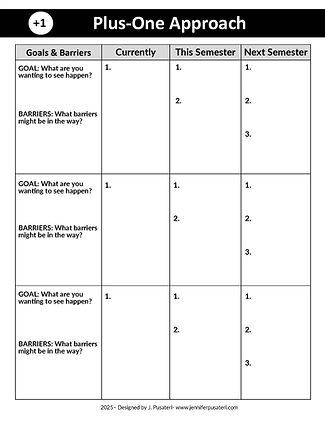
Plus-One Approach-Worked Examples- click image to go to an accessible PDF version.
Troubleshooting approach worked example- click image to go to an accessible PDF version
UDL as a Troubleshooting Guide- click image for an accessible PDF version
Journey Mapping Approach- Higher Ed. Worked Example-Research Paper Assignment. Click image for an accessible PDF version
Chapter 7

Chapter 8: Focus, Attention, & Motivation

Chapter 8

Chapter 9: Organization & Structure

Chapter 9

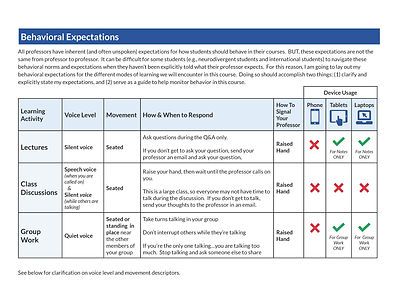
Chapter 10: Unclear Expectations & Social Interactions

Chapter 10

Chapter 11: Time-Management & Prioritization

Chapter 11

Chapter 12: Sensory & Emotional Regulation

Chapter 12

Chapter 13: Working Memory & Processing

Chapter 13
bottom of page